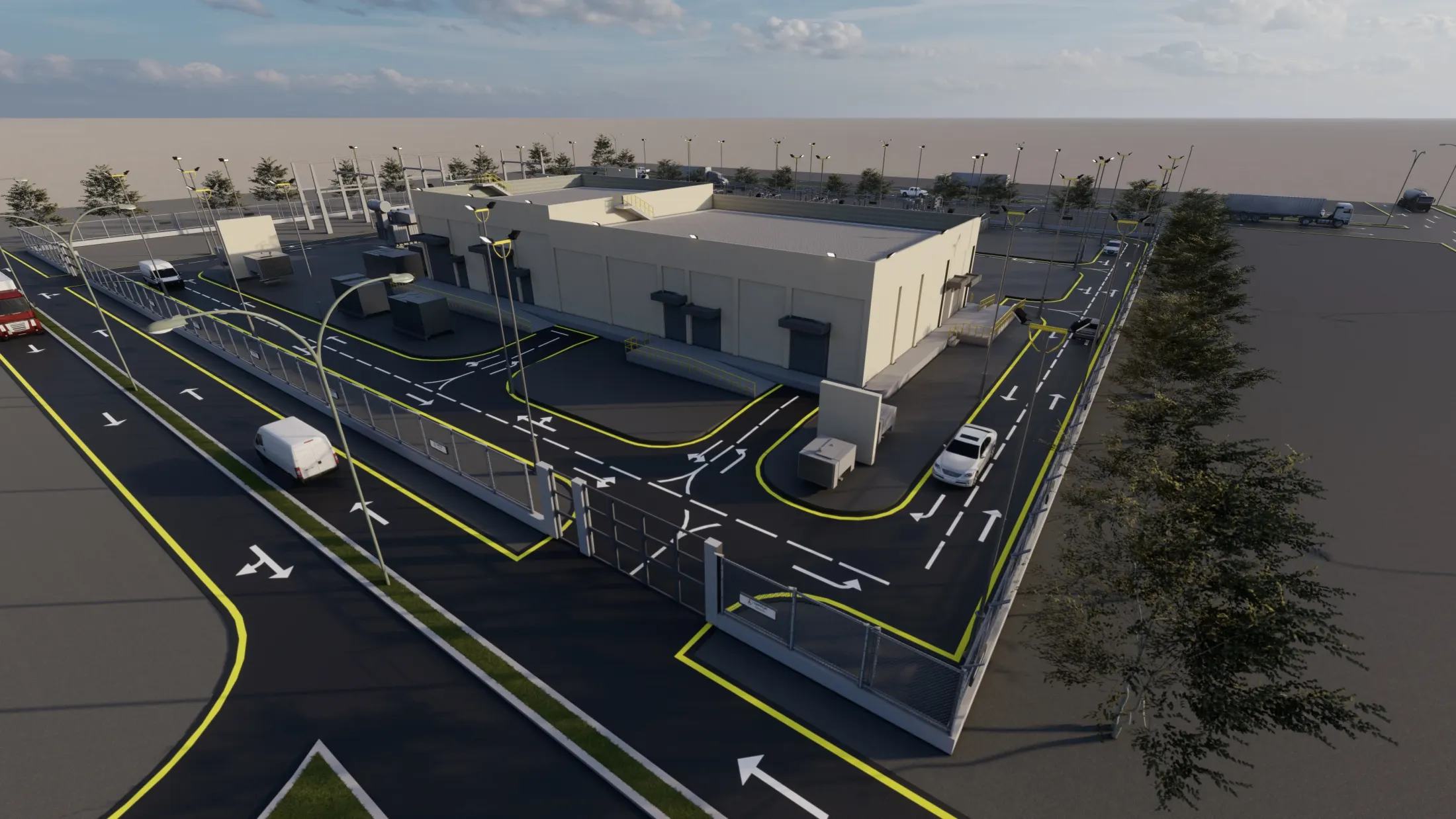
Introduction to Modern Grid Challenges
As global electricity demand surges due to rapid industrial growth, urban expansion, and the proliferation of data centres, power systems face unprecedented stress. Recent industry developments, including major investments to squeeze more capacity from aging grids and massive grid-scale battery storage deployments, highlight a universal truth: traditional transmission infrastructure must evolve. For project owners, developers, and engineers across Jordan, Saudi Arabia, and the broader region, efficient electrical substation design has become the cornerstone of reliable energy delivery and successful renewable integration.
Modernising the electrical grid requires a holistic approach that bridges primary power engineering with advanced digital monitoring. Substation upgrades are no longer just about handling higher voltage loads; they are about embedding flexibility, resilience, and automation into every tier of the transmission and distribution network. This technical overview examines the critical drivers shaping contemporary substation engineering, from advanced switchgear configurations to intelligent automation protocols.
The Critical Role of Electrical Substation Design in Grid Capacity
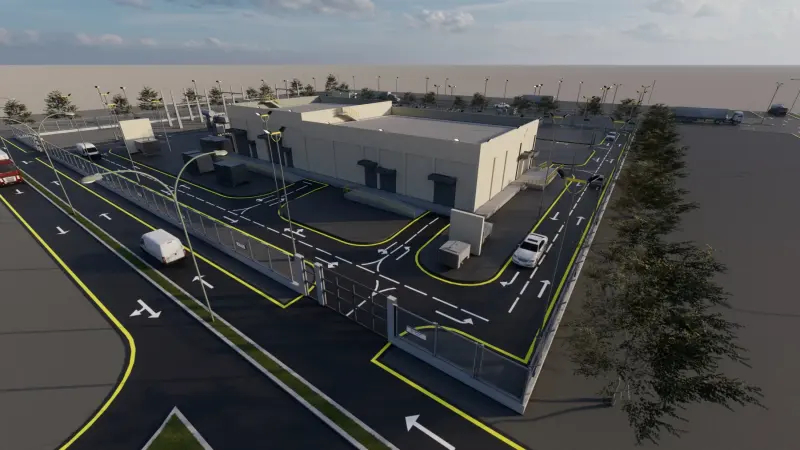
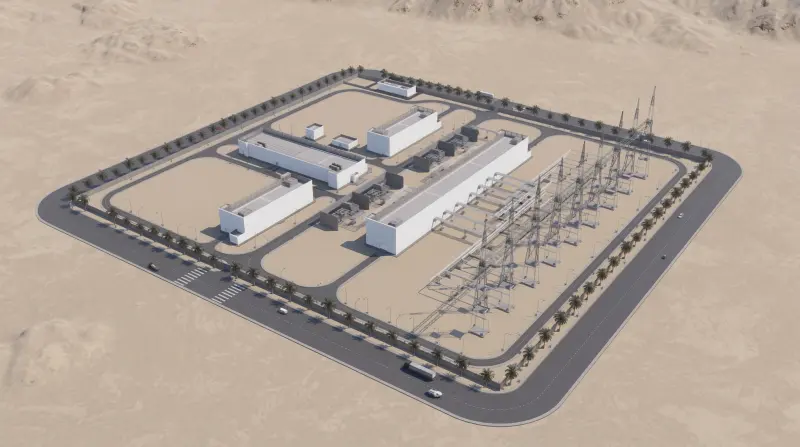
An electrical substation acts as the vital heart of any transmission network, stepping voltages up for long-distance transport or stepping them down for safe industrial and commercial distribution. When grid bottlenecks threaten to stall regional development, optimising substation layouts and equipment specifications becomes an engineering imperative.
Primary Engineering and High-Voltage Equipment
At the core of high-voltage (HV) and extra-high-voltage (EHV) installations lie robust primary equipment arrangements. Designing these systems involves meticulous planning of:
- Busbar configurations (single, double, or breaker-and-a-half schemes) to ensure operational redundancy.
- Power transformers equipped with modern cooling and online monitoring systems.
- High-voltage circuit breakers and disconnectors capable of interrupting heavy fault currents safely.
- Surge arresters and insulation coordination studies to protect assets from lightning and switching overvoltages.
Gas-Insulated Switchgear (GIS) Versus Air-Insulated Switchgear (AIS)
Space constraints and environmental factors frequently dictate the choice of switchgear technology in modern urban and industrial projects. The following table compares GIS and AIS solutions across key engineering parameters:
| Parameter | Gas-Insulated Switchgear (GIS) | Air-Insulated Switchgear (AIS) |
|---|---|---|
| Space Requirement | Compact footprint (saves up to 70-80% space) | Extensive land area required |
| Environmental Sensitivity | Enclosed in SF6 or alternative gas, protected from pollution | Exposed to dust, humidity, and salt corrosion |
| Initial Capital Cost | Higher equipment procurement cost | Lower initial equipment cost |
| Maintenance Needs | Low maintenance frequency, specialized procedures | Regular visual inspection and cleaning required |
Integrating Renewable Energy and Storage into Transmission Substations
The global transition toward clean energy has fundamentally altered power flow dynamics. Traditional substations were designed for unidirectional power flow—from central thermal power plants down to passive consumers. Today, utility-scale solar photovoltaic plants, wind farms, and battery energy storage systems (BESS) inject power unpredictably across transmission and distribution grids.
Accommodating these distributed energy resources (DERs) demands advanced substation engineering capable of managing bidirectional power fluctuations. Engineers must incorporate specialised switching stations, flexible connection agreements, and dynamic reactive power compensation devices, such as Static VAR Compensators (SVC) or STATCOMs, to maintain voltage stability. Furthermore, integrating large-scale storage requires robust auxiliary power systems and dedicated transformer bays to handle rapid charging and discharging cycles without compromising grid integrity.
Digitalisation, SCADA, and IEC 61850 Substation Automation
Secondary engineering—encompassing protection, control, metering, and telecommunication systems—has undergone a digital revolution. Modern substations rely heavily on intelligent electronic devices (IEDs) communicating over standardised protocols.
The Impact of IEC 61850 Standard
The implementation of the IEC 61850 standard has transformed substation automation systems (SAS) by enabling seamless interoperability among equipment from different manufacturers. Key benefits include:
- Station bus and process bus architecture using fibre-optic Ethernet networks, drastically reducing copper cabling.
- High-speed peer-to-peer communication for interlock and trip signals via Generic Object Oriented Substation Events (GOOSE).
- Sampled Measured Values (SMV) transmitted directly from optical current and voltage sensors to protection relays.
- Enhanced remote monitoring and diagnostic capabilities integrated with central Supervisory Control and Data Acquisition (SCADA) networks.
Civil, Structural, and Multidisciplinary Coordination
While electrical engineering dictates the electrical parameters, a successful substation project relies heavily on rigorous civil and structural design. Substation control buildings, transformer fire walls, cable trenches, equipment foundations, and GIS buildings must withstand local environmental extremes, seismic loads, and rigorous safety codes. Multidisciplinary coordination ensures that mechanical ventilation, HVAC systems, fire-fighting networks, and structural steel supports integrate flawlessly with electrical layouts, preventing costly site clashes during construction.
Key takeaways
- Holistic Planning: Modern electrical substation design must balance primary power equipment capacity with intelligent secondary automation systems.
- Technology Selection: Choosing between GIS and AIS depends on spatial availability, environmental conditions, and lifecycle maintenance considerations.
- Renewable Readiness: Grid modernisation must accommodate bidirectional power flows and large-scale battery energy storage integration.
- Digital Interoperability: Adopting standards like IEC 61850 ensures future-proof substation automation and robust SCADA connectivity.
How HREO can help
Holy Rock Consultant Engineers (HREO) offers comprehensive engineering solutions, specialising in the design of electrical substations and power infrastructure across the region. With decades of multidisciplinary expertise, our team delivers integrated designs covering civil, electro-mechanical, primary, and secondary engineering. To discover how our technical capabilities can support your transmission projects, explore our Electrical Substations & Power Systems Design services.
By maintaining strict adherence to international engineering standards and leveraging advanced coordination methodologies, HREO ensures that every substation project achieves optimal reliability, constructability, and operational safety from concept to completion.
Frequently asked questions
What is the difference between GIS and AIS substations?
GIS (Gas-Insulated Switchgear) uses SF6 or alternative gas in a sealed enclosure, requiring up to 80% less space than AIS (Air-Insulated Switchgear), which relies on ambient air clearances.
Why is IEC 61850 important in modern substation design?
IEC 61850 standardizes communication between intelligent electronic devices (IEDs), enabling high-speed peer-to-peer GOOSE messaging, reducing copper cabling, and ensuring interoperability across vendor equipment.
How does renewable energy integration affect substation engineering?
Integrating solar, wind, and battery storage introduces bidirectional power flows, requiring dynamic reactive power compensation, flexible connection agreements, and enhanced transformer bay designs.