In the world of architectural and structural engineering, the perpetual challenge has always been how to accurately transfer a mental image and complex design from the engineer's mind to the computer screen, and ultimately to reality. With the advent of Building Information Modeling (BIM), we achieved a massive leap in design precision and multidisciplinary coordination. However, at Holy Rock Consultant Engineers (HREO), we decided to take this experience to an entirely new dimension: Virtual Reality (VR).
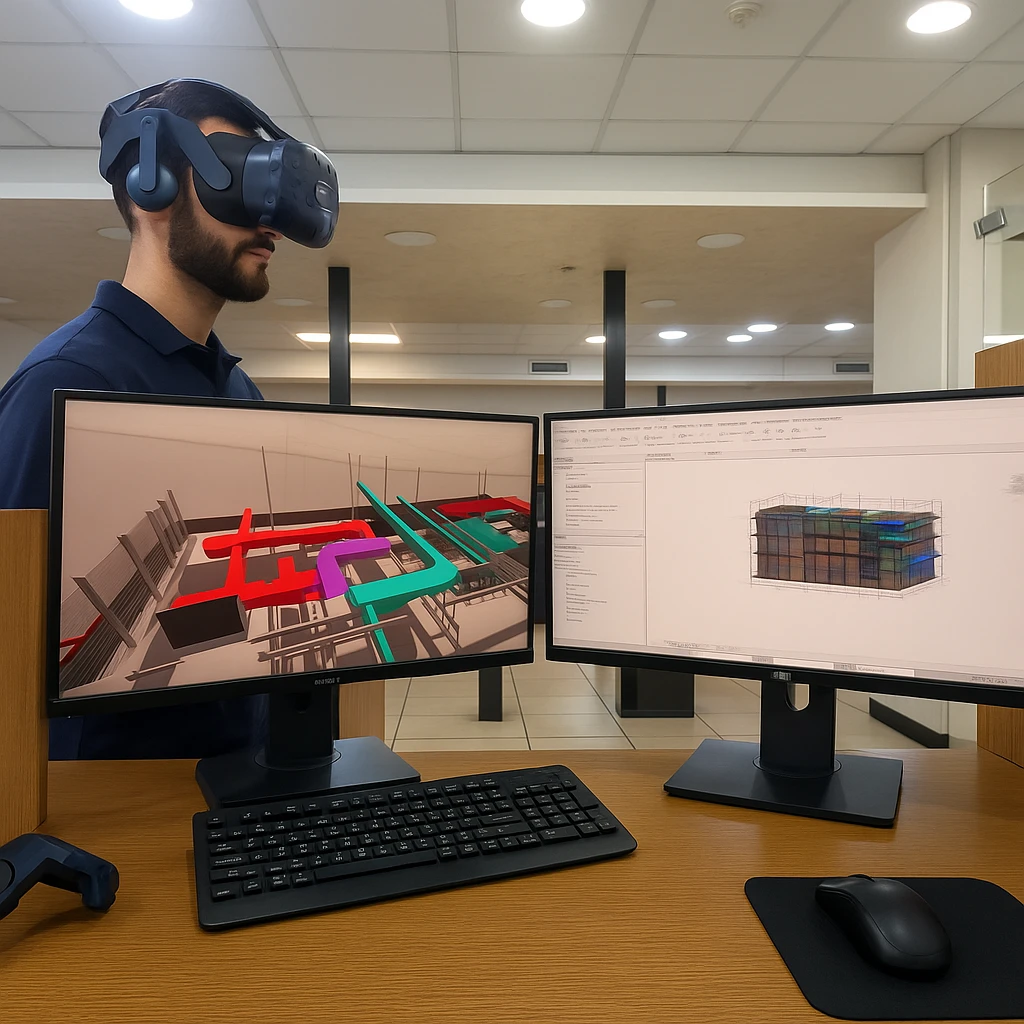
More Than Just a 3D Model... It’s a True Simulation Imagine being able to walk through your project—whether it’s a massive power substation or a commercial tower—to inspect ceiling heights, feel the expansiveness of the corridors, and see the MEP routing right above you... all before a single drop of concrete is poured! This is exactly what integrating Virtual Reality (VR) with BIM models offers.
The experience goes far beyond "aesthetic viewing"; it is an immersive exploration of data-rich models at a true 1:1 scale. This technological shift moves the owner and investor from being "blueprint spectators" to "actual testers" of the spatial environment.
Our Experience at HREO: When Imagination Becomes Tangible Reality In our relentless pursuit of industry leadership, we at HREO practically applied VR technology to the BIM models of our complex projects, and the results were exceptional by all standards.
This integration fostered an unprecedented communication environment among the design team, project management, and clients. By wearing VR headsets, our clients were able to walk inside their unbuilt projects, test visual perspectives, and make crucial decisions regarding space distribution and material selection in a matter of minutes—decisions that traditionally required weeks of back-and-forth modifications on 2D drawings.
For our engineering team, VR acted as an "interactive microscope." It empowered our engineers across various disciplines (Architectural, Structural, and MEP) to stand face-to-face with clash points, facilitating proactive and innovative resolutions. This preemptive problem-solving ensures that our extracted Shop Drawings remain absolutely flawless.
Why is VR the Smartest Investment in Mega Projects?
- Eliminating "Site Surprises": What you see in the virtual environment is exactly what will be built, drastically reducing variation orders and rework costs to near zero.
- Accelerating Approvals: The project becomes instantly comprehensible to non-technical stakeholders, significantly accelerating the decision-making cycle.
- Enhancing Occupational Safety: We can simulate operation and maintenance scenarios for heavy equipment (such as in power plants) to verify safe clearances and working conditions before construction begins.
Our Vision for the Future After 36 years of engineering excellence, we at HREO firmly believe that integrating VR with BIM is not merely a "technological luxury," but the new industry standard for transparency and engineering precision. We remain committed to harnessing the latest global technologies to deliver projects that consistently exceed expectations, because building a great legacy requires exceptional engineering tools.
36 Years... Evolving precision, building a legacy.