Introduction to Modern Digital Delivery in Infrastructure
As the architecture, engineering, and construction (AEC) industry across Jordan, Saudi Arabia, and the broader GCC region continues to expand rapidly, the complexity of mega-projects demands more than traditional 2D computer-aided design. At Holy Rock Consultant Engineers (HREO), we implement advanced digital methodologies such as Building Information Modeling (BIM), leveraging standardized frameworks like ISO 19650, openBIM, and industry formats like IFC to streamline coordination. Recent international developments, including the buildingSMART project plan initiative for High & Medium Voltage Power Transmission & Distribution (voting ending November 13, 2026), underscore how critical open, collaborative data standards have become for heavy electrical and utility infrastructure.
The Role of openBIM and ISO 19650 in Complex Power Grids
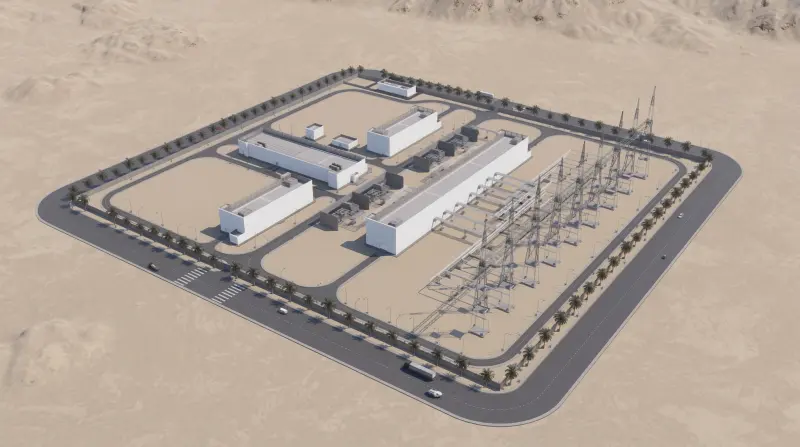
Managing high-voltage infrastructure requires rigorous information management protocols. ISO 19650 establishes the collaborative principles for managing information throughout the entire lifecycle of a built asset using BIM. When combined with openBIM practices, multidisciplinary teams can seamlessly exchange data between platforms like Revit and Navisworks without proprietary software lock-in. This is particularly vital when executing specialized utility projects, where electrical substations, transmission towers, and high-voltage cabling corridors intersect with urban master plans and delicate topographical constraints. Our team applies these exact standards through our specialized Building Information Modeling (BIM) services to ensure absolute precision from design conception to handover.
Clash Detection, 4D Scheduling, and 5D Cost Estimation
The transition from static drawings to intelligent multidimensional models empowers project stakeholders with unprecedented oversight:
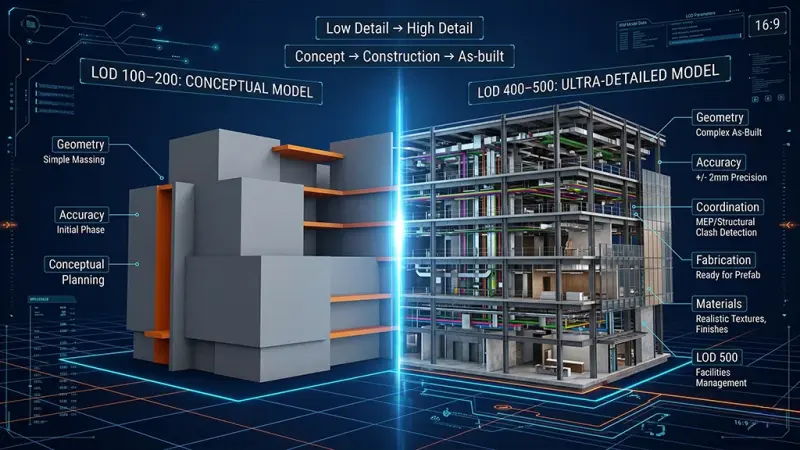
- Clash Detection: Utilizing Navisworks to proactively identify spatial conflicts between structural elements, architectural layouts, and complex mechanical, electrical, and plumbing (MEP) routes before physical construction begins on site.
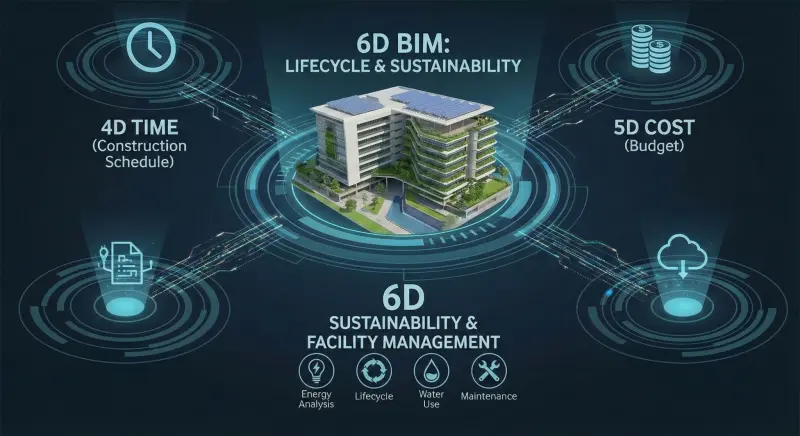
- 4D Modeling: Integrating time-related schedule data with the 3D geometry to simulate construction sequences, mitigate delays, and optimize site logistics.
- 5D Cost Estimation: Linking component quantities and material parameters directly to cost databases to maintain strict budget controls and prevent costly overruns.
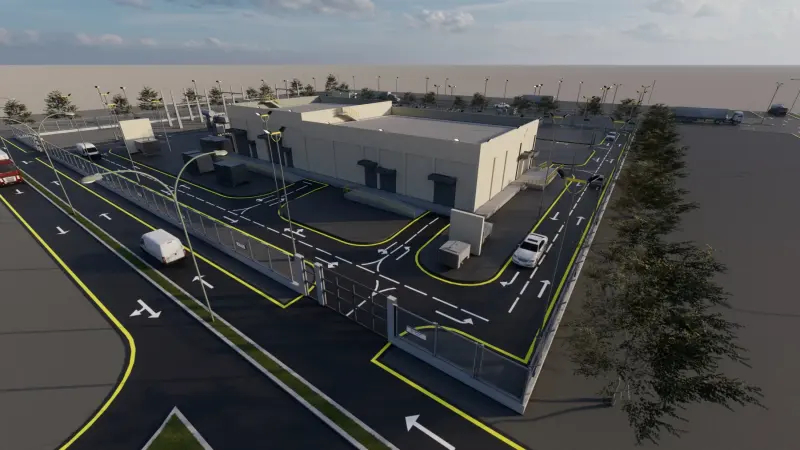
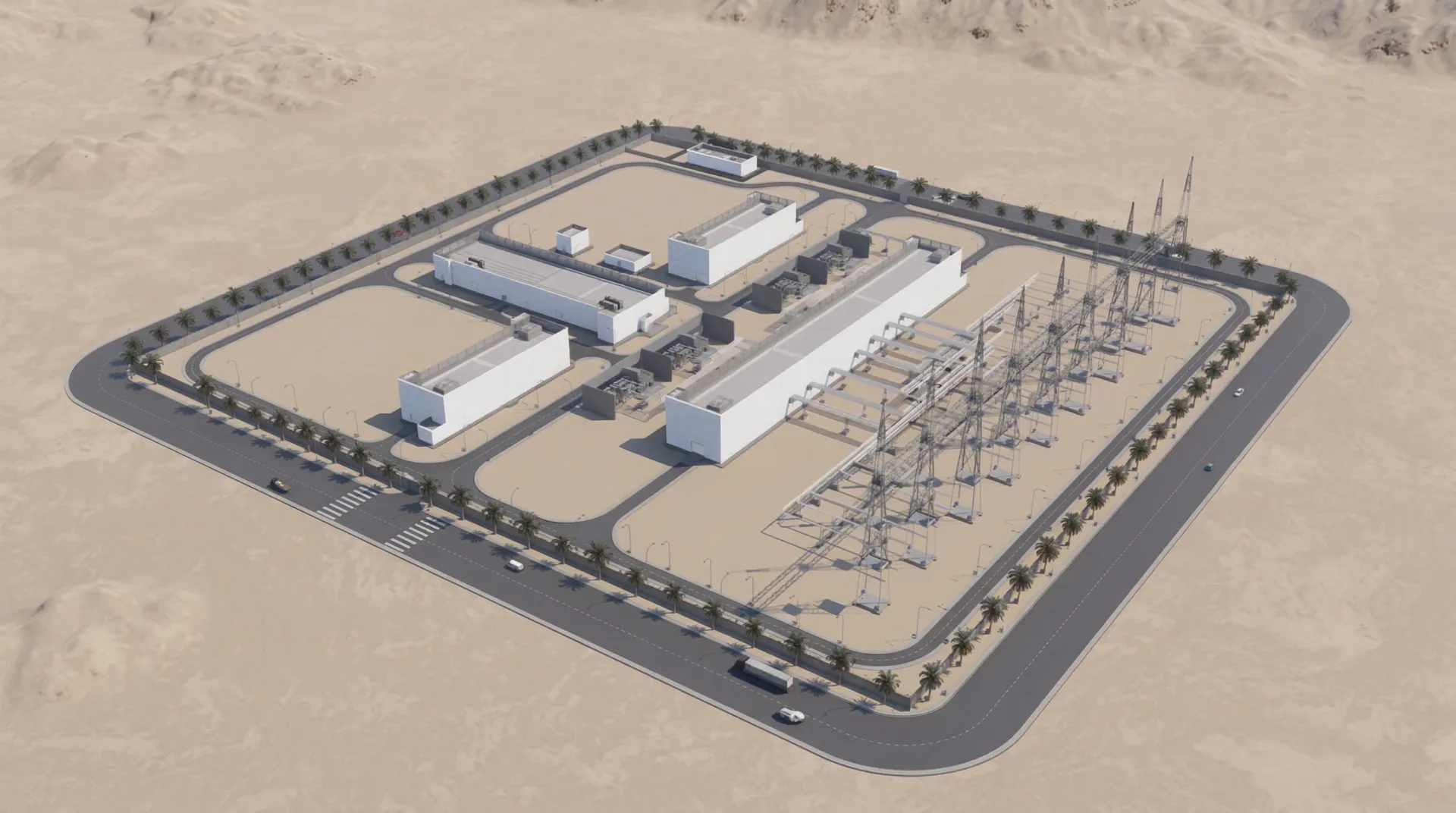
These coordinated workflows are indispensable when designing complex industrial and high-voltage facilities. Our engineering professionals utilize these digital paradigms extensively in parallel with our Electrical Substations & Power Systems Design capabilities, ensuring that high-voltage switchgear, transformers, and protection schemes integrate flawlessly into the overarching spatial and structural model.
Toward Digital Twins and Asset Lifecycle Management
A BIM model is not merely a design tool; it serves as the foundational database for a future digital twin. By embedding comprehensive asset data—such as equipment manufacturer specifications, maintenance schedules, and warranty details—into Industry Foundation Classes (IFC) formats, asset owners gain a live, interactive operational replica of their facility. For regional infrastructure projects in the GCC, this capability dramatically reduces operational expenditure (OPEX) and streamlines facility management long after the contractors have left the site.
Practical Takeaways for Regional Engineers and Project Owners
- Adopt Information Protocols Early: Establish a clear BIM Execution Plan (BEP) and Employer’s Information Requirements (EIR) aligned with ISO 19650 from project inception.
- Prioritize Interoperability: Insist on openBIM and IFC compliance to prevent data silos among architectural, structural, and electrical engineering consultants.
- Invest in Team Training: Ensure that local engineering teams are fully proficient in modern coordination tools like Revit and Navisworks to maximize productivity and minimize rework.
Conclusion
The integration of advanced BIM frameworks, open data standards, and rigorous information management protocols represents the absolute benchmark of modern engineering consultancy. At Holy Rock Consultant Engineers (HREO), our commitment to technological excellence ensures that every structure, substation, and master plan we deliver stands ready for the demands of tomorrow's smart cities and digital economies.
Frequently asked questions
What is openBIM and why is it important for infrastructure projects?
openBIM is a collaborative approach to open digital workflows based on open standards like IFC. It ensures that multidisciplinary teams working on complex infrastructure and power transmission projects can share data seamlessly across different software platforms.
How does ISO 19650 affect BIM implementation?
ISO 19650 provides the international standard for managing information throughout the life cycle of a built asset using BIM, establishing clear protocols for collaborative data production, review, and delivery.
Can BIM be integrated with electrical substation design?
Yes. BIM and advanced 3D modeling are routinely integrated with electrical substation and power system designs to perform clash detection, manage high-voltage clearance zones, and optimize spatial layouts.